
YouTube SEO Guide

Why Your YouTube Video Is Not Getting Views

If your YouTube video is not getting views or impressions, the issue is usually not random. Most channels struggle with topic targeting, title clarity, and optimization signals. Use this page to diagnose the cause and fix it with a clear action plan.

Most YouTube videos fail because of weak optimization signals, not because the content is bad.

Quick diagnosis

  • 0 impressions: fix keyword targeting and topic clarity.
  • Impressions but no clicks: fix title and thumbnail promise.
  • Clicks but low watch time: fix the intro and early retention.

Why Most YouTube Videos Do Not Get Views

If your YouTube video is not getting views or impressions, it is usually caused by weak search positioning, unclear topic targeting, or low click-through rate. In most cases, the issue is optimization, not content quality.

Understanding whether your problem is impressions, clicks, or retention is the first step to fixing it. This guide helps you diagnose each stage and connect it with concrete actions using a YouTube SEO tool and a free YouTube SEO checker.

Impressions vs Views - Identify the Real Problem

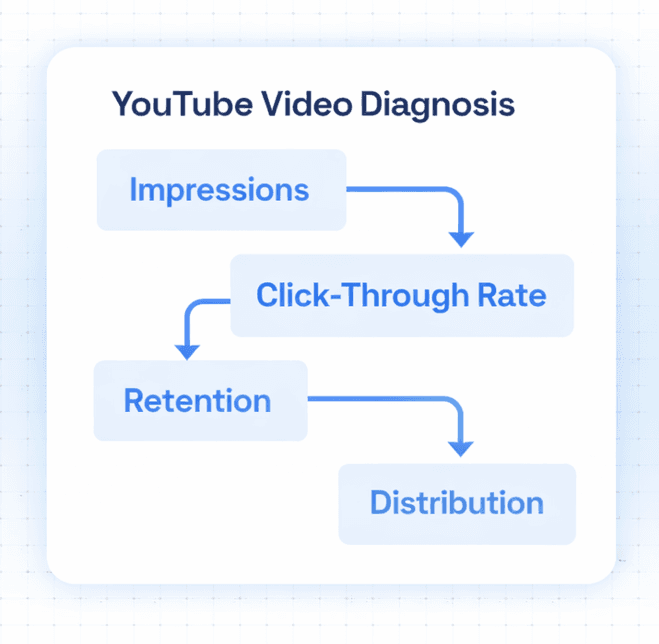
YouTube video diagnosis flow from impressions to click-through rate, retention, and distribution

Getting 0 impressions

This usually means weak keyword targeting, unclear topic framing, or low search demand for the way your video is positioned.

It can also mean YouTube has not fully tested your video yet. Focus on precise query wording and clear topical relevance before assuming distribution issues.

Getting impressions but no clicks

If impressions are present but views stay low, your title and thumbnail likely do not create a strong, relevant promise.

Improve clarity first: one topic, one promise, one audience intent. This is often the fastest way to increase CTR and restore momentum.

How YouTube Tests New Videos

YouTube usually starts by showing a new video to a small audience sample. It then evaluates early click-through rate, watch time, and satisfaction signals to decide whether to expand distribution.

If early metrics are strong, impressions scale across Search, Browse, and Suggested. If they are weak, distribution can stall. This is why optimization quality matters at upload time.

Common causes

Most low-view videos fail for repeatable reasons. Expand each cause before changing your entire content strategy.

Weak keyword targeting

YouTube uses your title and description to understand which queries your video should match. If your phrasing does not reflect real search terms, your video can miss the right audience.

Use the same language viewers type in search, not only creator jargon. Small wording changes can improve discoverability.

Low title and thumbnail click-through

If impressions are present but CTR is low, YouTube gets a weak quality signal and reduces distribution over time.

Your title and thumbnail must communicate one clear outcome. Mismatch between promise and visual framing usually hurts clicks.

Poor retention in the first 30 seconds

Early audience drop-off signals weak satisfaction and can reduce recommendation momentum in Browse and Suggested.

Lead with the value quickly, avoid slow intros, and confirm what viewers will get in the opening seconds.

Metadata not optimized

Titles and descriptions without clear keyword structure make it harder for YouTube to classify your video correctly.

Put your primary topic near the beginning of the title and reinforce it naturally in the first lines of description.

Unclear audience intent match

Even good videos underperform when the format does not match what viewers expect from that query.

A tutorial query expects steps, while a comparison query expects a decision framework. Match the intent to improve performance.

Is Your Channel Shadowbanned?

Most creators believe they are shadowbanned when videos get low views. In reality, YouTube distributes videos based on performance signals like click-through rate, watch time, and viewer satisfaction.

If metrics are weak, distribution slows down. If metrics improve, distribution often returns. Diagnose performance first before assuming penalties. Use a free YouTube SEO checker to spot weak title, description, and discoverability signals before changing your whole content strategy.

Quick optimization checklist

  • Put the primary keyword near the beginning of the title.
  • Write a clear description with the main topic in the first two lines.
  • Align title and thumbnail with one specific promise.
  • Improve the first 30 seconds with a strong hook and clear outcome.
  • Check if the video format matches search intent (tutorial, review, comparison, etc.).
  • Update weak metadata and re-evaluate performance after 7-14 days.

If you want full-channel optimization and Shorts scoring, continue inside the Makefy dashboard.

Should You Update a Video That Is Not Getting Views?

Yes. Start by updating metadata first, then wait 7-14 days to measure changes. In many cases, improving title and description is enough to unlock better testing and distribution.

If impressions are present but CTR is low, change thumbnail and title before rewriting the whole video. Fix click issues first, then evaluate retention.

Screenshot of Makefy free YouTube SEO checker report

Use the free YouTube SEO checker

Analyze your video with our dedicated checker page and get clear SEO recommendations for titles, descriptions, and discoverability.

If you want an end-to-end workflow, start from our YouTube SEO tool and run a full audit with the checker.

Open Free SEO Checker

Frequently Asked Questions

Why is my YouTube video not getting impressions?

Low impressions usually mean your topic and keywords are not aligned with what people search for. It can also happen when demand is low for your phrasing or YouTube has not identified a clear audience match yet. Improving title clarity and query alignment helps increase testing.

Why is my YouTube video stuck at 0 views?

A video stuck at 0 views usually has very low impressions. This happens when metadata does not match real search intent or when early testing has not started yet. Clear keyword phrasing and better thumbnail relevance often increase exposure.

How long does it take for YouTube to start pushing a video?

There is no fixed timeline. Some videos get tested within hours, while others take days depending on topic demand and early performance signals. Monitor the first 24 to 72 hours, then optimize if impressions and CTR stay weak.

Is low views always a content quality problem?

Not always. Many useful videos underperform because packaging is weak, not because the content itself is bad. Fix title, thumbnail, and metadata first before assuming the video topic failed.

What should I optimize first?

Start with title and thumbnail if CTR is low, then improve the first lines of your description for search intent. After changes, wait 7 to 14 days before making major edits. A free YouTube SEO checker can help prioritize the highest-impact updates.

Does changing the title hurt performance?

Changing a title can temporarily reset how viewers respond, but it does not automatically hurt performance. If CTR is weak, a clearer and more intent-matched title is often worth testing. Track results for several days before deciding if the change worked.

Should I delete and reupload a video with low views?

Usually no. Reuploading removes existing watch history, comments, and momentum signals. In most cases, updating title, thumbnail, and description is safer than starting over.

Can tags still help YouTube SEO?

Tags have limited impact compared with title, description, CTR, and retention. They can still help with misspellings or alternate phrasing, but they should not be your main strategy. Prioritize search intent and viewer response signals.

Why are my YouTube Shorts not getting views?

Shorts depend heavily on early retention and swipe behavior. If viewers leave quickly, distribution can stop fast. Strong first seconds, clear topic framing, and consistent posting improve the chance of getting more Shorts impressions.